

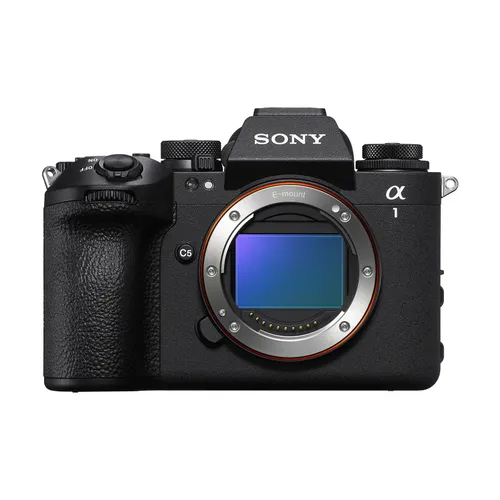

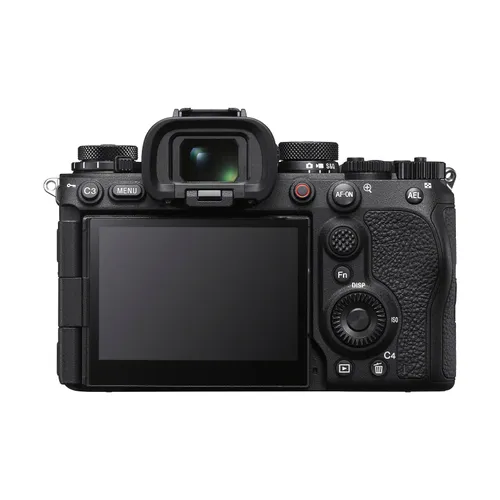
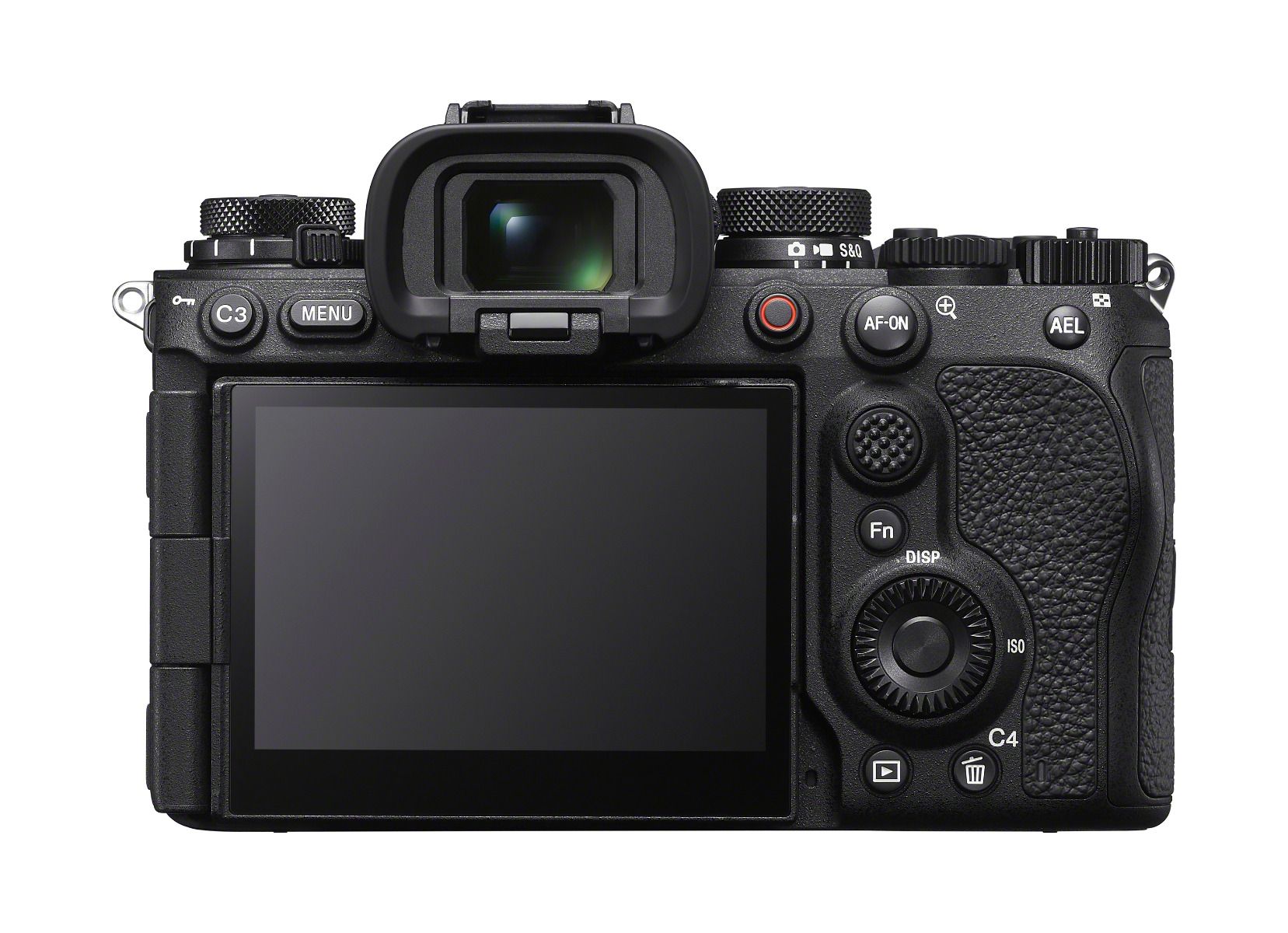
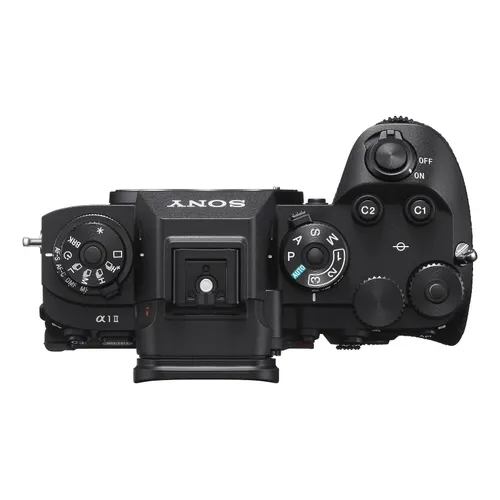
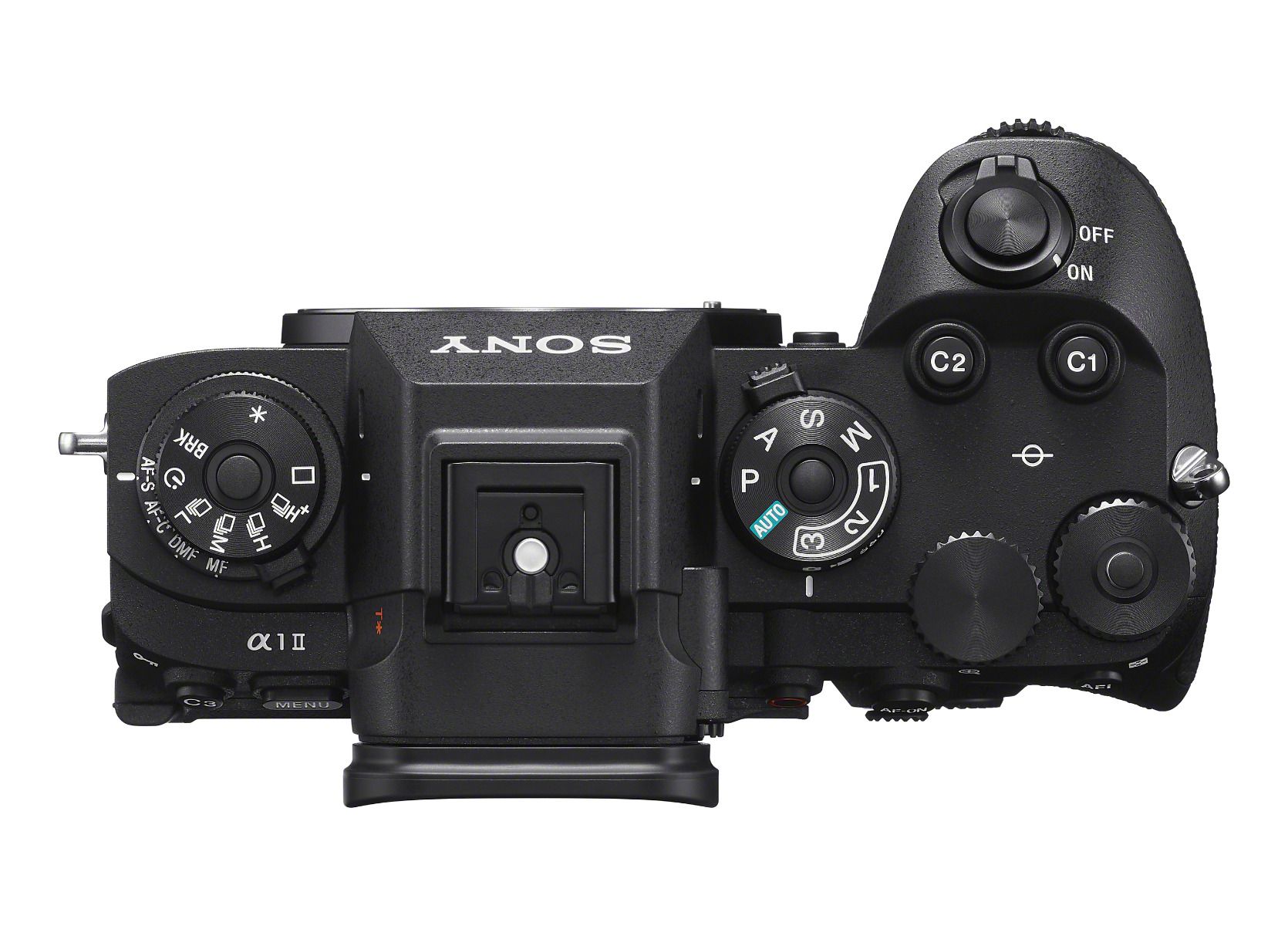
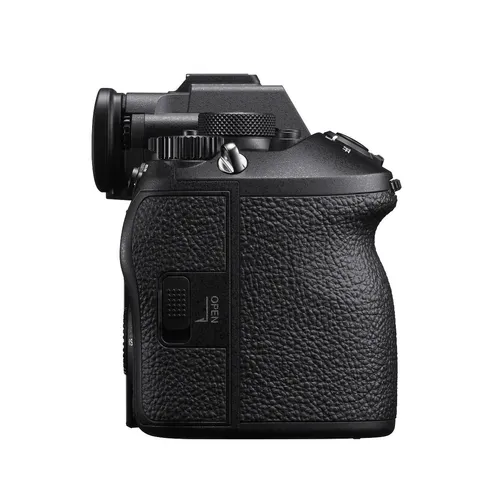

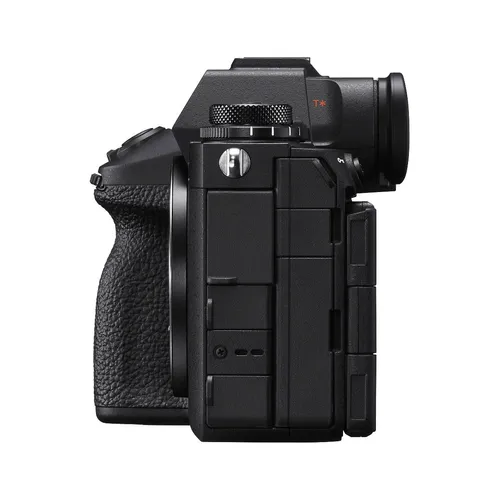

Sony a1 II Mirrorless Digital Camera - Body Only
Our Part Number:
SON1858
Manufacturer Part No:
ILCE-1M2B
In Stock
qty.
Notify me about price drops
The α1 II gives users everything they need to achieve a higher capture success rate and more, including 50MP high resolution, AI-based subject recognition AF, high-speed continuous shooting, and an advanced workflow from capture to delivery that provides professionals with unrivalled efficiency and freedom.
A fusion of leading technologies delivers overwhelming performance
The massive volume of data from the 50.1 megapixel*1 full-frame Exmor RS™ image sensor is processed in real time by Sony’s BIONZ XR™ image processing engine. An advanced AI processing unit applies high-level subject recognition to reliably recognize a wide range of subjects. These state-of-the-art technologies make it easy to capture even the most challenging subjects in extraordinary resolution, with blackout-free viewing and full AF/AE tracking at up to 30 fps. *2
An advanced AI processing unit achieves high-level subject recognition
The α1 II features a dedicated AI processing unit that helps to recognize people more accurately based on human pose estimation and supports recognition of a wide range of subjects other than people, such as animals, vehicles and insects5, with high accuracy. This results in a dramatic improvement in Real-time Recognition AF and Real-time Tracking capability, and higher overall AF performance.
Human eye recognition imrpoved by up to approximately 30%6
Real-time Recognition AF has improved human eye recognition by approximately 30%6, and its human pose estimation technology also delivers precise recognition of subjects facing away from the camera, wearing sunglasses, or with the face obscured. Recognition of distant human subjects occupying only a small part of the frame has been notably improved, so approaching subjects are recognized and tracked sooner. Subjects can also be tracked better across occlusions among many people.
A wide variety of subjects accurately recognized7
A wider variety of subjects7 is now recognized for stills and movies, with a new [Auto] mode letting the camera select. 8 Recognition of animals overall is improved by approximately 30%6, with eyes of some small animals added, and the eyes, heads and faces of animals like dogs and cats recognized. Recognition of birds is improved by 50%6.
AF tracking response settable to match subject speed changes
Fast Hybrid AF combines phase detection and contrast detection for superb speed, precision and tracking performance. 75910 phase-detection points cover 92% of the image sensor. The AF tracking response for stills can now be selected from [Stable], [Standard], and [Responsive] to suit the likely subject motion, useful for example in bird photography. High AF precision is achieved right down to light levels as low as EV-4.011 in AF-S mode, with improved contrast AF response.
Flexible focus area settings
XL and XS focus area spot sizes are now available in addition to the existing L, M, and S. XS can be useful to avoid focusing on foreground objects such as branches. It is also possible to create a custom focus area of specified size and aspect ratio, useful in situations like a track event where athletes are lined up side-by-side and you want to focus on the leading runner.
Selectable release time lag
Selectable release time lag modes are available via the [Release Lag] / [Start Display] menu 16. With blackout occurring on only the first image in a continuous burst, [Fastest Release/On] provides the shortest possible release time lag, while [Stable Release/On] minimizes variations in release time lag making it easier to release the shutter at the intended moment. The default [Auto/Off] setting gives no blackout when shooting is started.
High-speed continuous shooting at full 50.1 MP 1 resolution
High-speed continuous shooting at up to 30 fps2 with full AF/AE tracking is possible at a stunning 50.1 MP1 resolution, with up to 120 AF/AE calculations per second12 on the data from the image sensor. Blackout-free shooting with no loss of viewfinder image allows seamless framing and capture of the subject as if viewed with the naked eye.
Pre-Capture and Continuous Shooting Speed Boost
Pre-capture retroactively captures moments that occurred before the shutter was released13, 14, without compromising resolution, even when shooting continuously at up to 30 fps2 with selectable recording time options. Continuous Shooting Speed Boost can temporarily change the burst speed. Both features reduce the chance of missing that vital instant.
Stunning resolution with 50.1 megapixels1
Sony’s extensive high-performance G Master line work with the 50.1 megapixel1 Exmor RS image sensor and BIONZ XR image processing engine to create deep, lifelike, high-resolution rendering. The sensor’s high pixel count means that resolution is still a very impressive 21 megapixels (approx.) when shooting in APS-C mode or cropping to APS-C size after shooting.
Selectable RAW image size and quality
Compressed, Uncompressed, and high-compression Lossless compressed RAW still images are provided. Compressed RAW images can be shot continuously at up to 30 fps2. Three Lossless compressed RAW image sizes can be selected to suit the application: L, M, and S. Lossless compressed RAW, JPEG, and HEIF images in M and S size have the same number of pixels whether shot in the full-frame or APS-C mode, making it possible to seamlessly switch modes while maintaining the same image resolution. JPEG and RAW sizes can be freely mixed and matched to meet the needs of the application.
High sensitivity, low noise, and wide dynamic range
Feedback from professionals has been taken into account to create noise reduction that is highly effective without sacrificing image detail, so users can shoot clear images of indoor sports at mid to high sensitivity without hesitation. Dynamic range at lower sensitivities is an impressively wide 15 stops17 for smooth, realistic gradations.
Consistently accurate exposure and color
Exposure and color reproduction are notably improved compared to the α1. The AE algorithm detects faces and optimizes exposure for stills and movies. Exposure stability has been improved by approximately 20%18, even when the face is backlit and dark, or over-illuminated in direct sunlight, or not facing the camera. Working with a “Visible Light and IR Sensor” on the front of the body, the advanced AI processing unit helps to achieve accurate white balance even where the subject is in shade.
Optical 5-axis image stabilization achieves 8.5-step performance at the center
A high-precision image stabilization unit, advanced gyro sensors, and leading-edge algorithms detect and correct camera shake, achieving a groundbreaking up to 8.5-step effect at the center and 7.0-step at the periphery, and transforming handheld shooting with precision down to the single-pixel level and the finest subject details. With compatible lenses that include built-in stabilization19, improved body-lens synchronization provides effective blur control even at otherwise problematic telephoto focal lengths.
Composite RAW modes for lower noise and higher resolution
The NR Shooting Settings mode captures between 4 and 32 RAW images which can then be composited using Sony’s Imaging Edge Desktop™ application to create a full-resolution image with very low noise even at mid to high sensitivities. Pixel Shift Multi Shooting20 captures 4 or 16 pixel-shifted images that are later composited with the same PC application to achieve overwhelming resolution21 in a single image.
Notes:
- Approximate, effective.
- When using electronic shutter. Sony test conditions. Maximum continuous frame rate may be lower in some shooting conditions. Continuous shooting speed may vary depending on the lens used in AF-C focus modes. Visit Sony’s support web page for lens compatibility information.
- CIPA 2024 standards. Pitch/Yaw/Roll compensation. FE 50mm F1.2 GM lens. Long exposure NR off.
- With approx. 10% image crop. When recording 4K 120p/100p or 8K movies, [APS-C S35 Shooting] is fixed [Off]. 35mm full-frame lenses are recommended.
- Available subject settings are: Auto, Human, Animal/Bird, Animal, Bird, Insect, Car/Train, and Airplane. Subject types other than the type specified may be erroneously recognized in some cases.
- Compared to the α1. Sony tests.
- Available subject settings are: Auto, Human, Animal/Bird, Animal, Bird, Insect, Car/Train, and Airplane. Subject types other than the type specified may be erroneously recognized in some cases.
- When Auto is selected the camera will normally recognize the subject type automatically, but the wrong type may be selected in some situations. In such cases manually selecting the intended subject type may solve the problem.
- [Tracking] in the menu.
- For still images. The number of points varies according to the shooting mode.
- ISO 100 equivalent, F2.0 lens.
- At shutter speeds of 1/125 sec. or higher. May be less depending on shooting conditions and the lens used.
- Maximum pre-capture time may be less in some situations.
- High continuous shooting speeds can cause an increase in camera temperature. Pre-capture may be limited to protect the device in high ambient temperature conditions.
- Recording to Sony CEA-G160T CFexpress Type A memory card (sold separately). Sony tests.
- When using electronic shutter.
- When shooting stills. Sony test conditions.
- Sony tests.
- See Sony’s support web page for information on compatible lenses: https://www.sony.net/dics/fnc1002/ A software update may be required for some lenses. Stabilization may vary according to the lens used.
- The Imaging Edge Desktop™ Viewer and Edit applications are required for compositing. Image compositing may not be successful if camera or subject movement causes blur. The use of a tripod is recommended, as is the use of PC tethered control or a remote commander. Uncompressed RAW and electronic shutter are automatically selected for Pixel Shift Multi Shooting. Some restrictions apply to flash and other devices.
- Four 49.7-megapixel images provide approx. 199 million pixels, and sixteen 49.7-megapixel images provide approx. 796 million pixels. Image size after compositing is approx. 49.7 million (8640 x 5760) pixels for 4-image shots, and approx. 199 million pixels (17280 x 11520) for 16-image shots.
Lens Mount
Sony E
Sensor Resolution (Effective, Actual)
50.1MP, 50.5MP
Sensor Size
35.9 x 24mm Stacked CMOS (Full-Frame)
Image Stabilization
5-Axis Sensor Shift
Shutter Speeds
Mechanical: 1/8000s-30s
Electronic: 1/32000s-30s
Movie mode: 1/8000s-1/4s
ISO Sensitivity
100-32,000 (Extended: 50 - 102,400)
Exposure Compensation
-5 to +5 EVE (1/3, 1/2 steps)
White Balance
2500-9900K
Continuous Shooting Speeds
Up to 30fps at Maximum Resolution
Still Image Format
HEIF, JPEG, RAW
Bit-Depth
14-Bit
Internal Video Recording
H.264/XAVC S 4:2:2 10-Bit
UHD 4K (3840 x 2160) at 23.98/25/29.97/50/59.94/110/120 fps [100 to 280 Mb/s]
1920 x 1080 at 23.98/25/29.97/50/59.94 fps [50 Mb/s]
H.264/XAVC S 4:2:0 8-Bit
UHD 4K (3840 x 2160) at 23.98/25/29.97/50/59.94/100/120 fps [60 to 200 Mb/s]
1920 x 1080 at 23.98/25/29.97/50/59.94/100/120 fps [16 to 100 Mb/s]
H.264 ALL-Intra/XAVC S-I 4:2:2 10-Bit
UHD 4K (3840 x 2160) at 23.98/25/29.97/50/59.94 fps [240 to 600 Mb/s]
1920 x 1080 at 23.98/25/29.97/50/59.94 fps [89 to 222 Mb/s]
H.265/XAVC HS 4:2:2 10-Bit
UHD 8K (7680 x 4320) at 23.98/25/29.97 fps [260 to 520 Mb/s]
UHD 4K (3840 x 2160) at 23.98/50/59.94/100/120 fps [50 to 280 Mb/s]
H.265/XAVC HS 4:2:0 10-Bit
UHD 8K (7680 x 4320) at 23.98/25/29.97 fps [200 to 400 Mb/s]
UHD 4K (3840 x 2160) at 23.98/50/59.94/100/120 fps [30 to 200 Mb/s]
External Video Recording
4:2:0 8-Bit via HDMI
UHD 8K (7680 x 4320) at 23.98/29.97 fps
UHD 4K (3840 x 2160) at 23.98/29.97/59.94 fps
1920 x 1080p at 23.98/59.94 fps
1920 x 1080i at 59.94 fps
4:2:2 10-Bit via HDMI
UHD 4K (3840 x 2160) at 23.98/29.97/59.94 fps
1920 x 1080p at 23.98/29.97/59.94 fps
1920 x 1080i at 59.94 fps
Raw 16-Bit via HDMI
4332 x 2446 at 23.98/24.00/29.97/59.94 fps
Gamma Curve
S Cineston, Sony S-Log 3
Audio Recording
2-Channel 16-Bit 48kHz Audio
Memory Card Slot
Dual Slot CFexpress Type-A / SD UHS-II Slots
I/O
1x HDMI Output
1x 1/8" 3.5mm TRS Headphone Output
1x 1/8" 3.5mm TRS Headphone Input
1x USB-C Input
1x RJ45 Data Output
1x PC Flash Sync Output
Wireless
2.4/5GHz Wi-Fi, Bluetooth 5.0
Monitor
3.2" 4-Axis Tiliting Touchscreen
Monitor Resolution
2,095,104 Dot
Viewfinder
0.64" 9,437,184 Dot OLED EVF
Autofocus Points
Phase Detect: 759
Contrast Detect: 425
Flash Sync Speed
1/400s
Battery
NP-FZ100 Li-ion battery
Operating Conditions
32 - 104°F
Dimensions
5.4x3.8x3.3"
Weight
23.2oz
Below are the items included with this product
- Sony a1 II Camera Body
- Body Cap ALC-B1EM
- Standard Eyepiece Cup FDA-EP19
- Deep Eyepiece Cup FDA-EP21
- Multi Interface Shoe Cap FA-SHC1M
- NP-FZ100 Battery
- BC-ZD1 Battery Charger
- Cable Protector
- Shoulder Strap